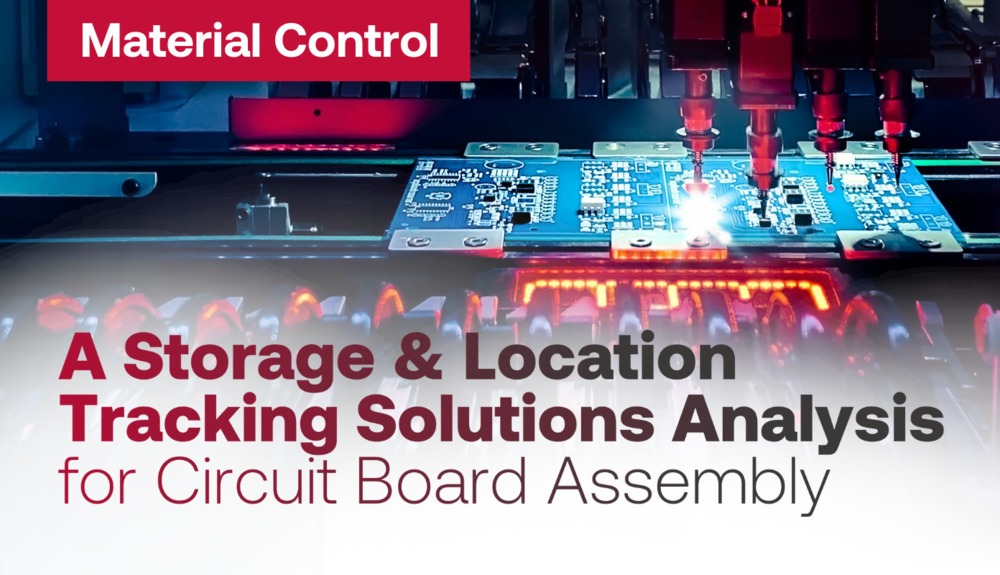
Material Control: A Storage & Location Tracking Solutions Analysis for Circuit Board Assembly

Introduction
Efficient and organized management of materials used in Printed Circuit Board Assembly is paramount. Given that material costs can account for up to 80% of a finished PCBA's expense, efficient control of these materials is not just an operational concern but a critical financial one. Manufacturers have to thread a delicate balance of maintaining enough inventory to prevent delays and production shortages, while avoiding excess that leads to waste and additional costs. The stakes are high, and the margin for error is slim.
Material handling is also labor-intensive and error-prone, especially when done manually. The post-pandemic economy has exacerbated this, with increased labor costs and widespread shortages increasing the need to reduce manual, non-value-added activities all the more essential.
What Comes First: Registration & Identification
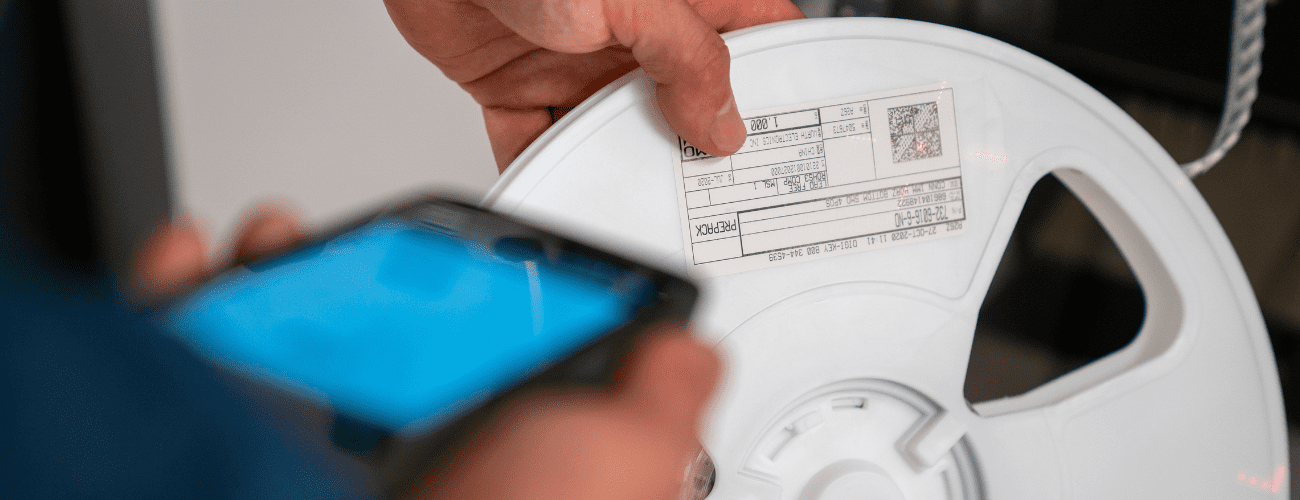
The journey of a material container – including not only reels, but also trays and sticks – through an electronics factory begins with its registration and identification. Each container must be assigned a unique identifier (UID) and linked to a comprehensive database of relevant data, from part and supplier information to lot details and special handling properties.

To facilitate the tracking of materials, manufacturers commonly generate and affix a barcode label to a material container that includes the UID and other essential information to each container once it has been registered. To enhance efficiency in this area, some providers, like Essegi, have introduced automated systems with equipment that utilize optical scanning technology to expedite the scanning and registration of incoming materials.
In many cases, Enterprise Resource Planning (ERP) systems can handle the receiving and registration of materials at the box level, but they often fall short at the container level, necessitating specialized solutions for detailed tracking and control.
Storage and Location Tracking
Once registered, the next hurdle is tracking the location of material containers, both in the warehouse and on the shop floor. This requires a system that can monitor movement across different storage types as well as the ability to integrate with intelligent storage solutions. Static shelving, automated storage towers, and smart racks are among the most used types of storage, however they all have their benefits and challenges.
1. Static Shelving
Benefits
- Inexpensive compared to automated solutions.
- Simple installation and virtually no maintenance required.
- Durable and long-lasting without frequent repairs or replacements.
- Minimal training needed for operators and material handlers.
- Flexibility to be used in various factory locations.
- Can be managed using smart mobile devices for ease of use.
Challenges
- Entirely manual, increasing labor cost and time.
- Prone to human error, such as scanning the wrong barcode.
- Requires significant floorspace, which may not be available near production lines.
- Manual processes are non-value-added and can lead to inefficiencies.
- Manual tracking and retrieval can be slow and cumbersome.
2. Automated Storage Tower
Benefits
- Automated barcode/RFID scanning for accurate tracking.
- Mechanized retrieval and put away save time and reduce labor.
- Cogiscan's Co-NECT & TTC Platforms offer integration for various storage towers and placement equipment, supporting both manual and automatic material requests, kitting, offline support, and system data synchronization.
- Batch loading and unloading capabilities for faster operations.
- Environmental controls for moisture-sensitive devices (MSDs).
- Can be paired with AGVs for automated material delivery to the line.
- Integrated parts counting for precise material tracking.
Challenges
- Need for synchronized material data across various systems.
- Ensuring automatic material replenishment requests are efficient.
- Manual material requests must be facilitated for ad hoc needs.
- Integration with job kitting and offline setup processes.
3. Smart Rack
Benefits
- Light assistance systems guide operators during picking and put away.
- Attached barcode scanners or RFID support for easy material identification.
- Cogiscan's Co-NECT & TTC Platform encompasses features for smart rack integration, kitting, offline setup, changeover, and replenishment, connecting seamlessly with factory systems.
- Position sensing to confirm the correct loading and unloading of materials.
- Battery-powered carts for mobility and flexibility in material transport.
- Compact design conserves valuable floor space.
- Complements automated storage towers for an efficient overall system.
Challenges
- Central system required to track material locations and quantities.
- Integration with proprietary inventory systems and other factory management systems.
- Ability to receive and manage material demands from various systems.
- Ensuring compatibility and communication with placement machines for setup and replenishment.
Tying it All Together
Whatever storage solution(s) you choose, effective material control in electronics manufacturing requires a robust, factory-level software platform tailored to the industry's specific needs. Such a platform must provide comprehensive tracking and control of materials throughout their lifecycle, integrate seamlessly with enterprise, warehouse, and shop-floor systems, and ultimately serve as a foundation for complete traceability and detailed analytics. Cogiscan's Track, Trace & Control (TTC) Platform is a preferred solution, with installations in over 400+ factories worldwide, that automates material management for PCB assembly, offering connectivity with a wide range of equipment brands and models.
For electronics manufacturers looking to streamline their material control processes, reduce waste, and enhance productivity and quality, adopting a comprehensive material control system like Cogiscan's TTC is critical.